SAP to open-stack ERP migration
Manufacturer, 500+ employees. Phased migration off SAP ERP onto an open stack with custom modules — run in stages while the plant kept working.
- 0 downtime
- 8 mo migration
- −40% on licences

Dispatch that argues with the WMS. Stock that disagrees with accounting. A driver app nobody uses because it needs three taps to confirm a delivery. We have fixed these in operation, without stopping the operation.
What we can show you
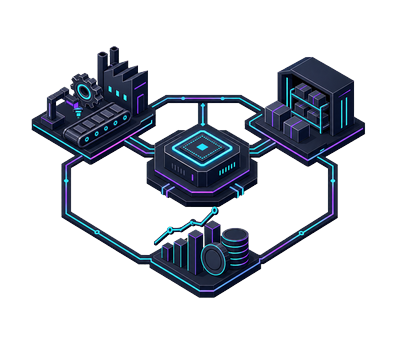
Three systems have to agree: what was ordered, what is in the warehouse, what was invoiced. Manual reconciliation is the real cost when they do not.
Logistics software is three systems that have to agree: what was ordered, what is physically in the warehouse, and what was invoiced. When they disagree, someone reconciles by hand — and that manual reconciliation is the real cost of a mismatched system.
A custom build starts from your process: your picking strategy, your carrier mix, your exception rules. A boxed WMS starts from its own and asks the warehouse to adapt, which works when your process is standard and fails when it is your advantage.
Build when the process is your competitive advantage, when per-user licences have outgrown a build, or when the integration layer is where the pain actually lives. Most of our logistics work is the third case: a box for the standard core, custom for the edges and the integrations.
Price
From $18,900
Timeline
6–8 weeks per module
Payment
By milestone
Six systems, and the integration layer that decides whether any of them are worth having.
Receiving, putaway, picking strategies, packing, inventory counts, barcode and scanner workflows that work with gloves on and on shared terminals.
Orders, planning, carrier integration, tracking, proof of delivery and freight cost reconciliation — the part that quietly loses money.
Vehicles, maintenance schedules, fuel, driver documents, telematics ingestion, and alerts that fire before a truck is off the road.
Shipment status, documents, claims. Usually the fastest return in this industry: it removes the phone calls.
ERP and accounting, marketplaces, carrier and postal APIs, EDI, customs brokers. We start with an audit of what moves where and who wins on conflict.
Document intake from carriers, exception triage, ETA explanations. See AI development.
We lose some deals on this page on purpose: a boxed WMS is genuinely the right answer for a standard process.
Buy a boxed WMS if your process is standard and you are willing to change it to fit the software. Cheaper and faster, and we will say so.
Build when the process is your competitive advantage, when you have flows a box cannot express, or when per-user licence costs have outgrown the build cost.
Most often: both — box for the standard core, custom for the edges and the integration layer. That third option is a lot of what we do.
Published because in this niche everyone hides them, and buyers compare licence stickers against build quotes with no common basis.
Client portal on top of an existing system — $7,990–18,900, 3–8 weeks.
Warehouse module for a single site with barcode flows — from $18,900, 6–8 weeks.
TMS or WMS core with integrations — from $35,900, 2–4 months.
Fleet management system — from $18,900, 6–10 weeks.
We will model the three-year total against your headcount and a boxed licence before you decide. If the box wins, that is a useful week for both of us.
Entry point
Scoping week $4,490
Rollout
Phased, with parallel run
Support after
Care from $790/month
Four things we can prove, not four adjectives.

Barcode flows on shared terminals, gloves on, poor Wi-Fi at the far end of the racks. That context decides interface choices no specification captures.

We start with an audit of what data moves where and which system wins on conflict — the question that decides whether the project works.
Pilot on one site or one flow, parallel run with the old process, cutover plan with a rollback. Warehouses do not reward big-bang projects.

Repository and cloud in your accounts, IP assigned at delivery, runbook on handover — no licence that expires and takes your operation with it.
Industries
We build with the domain in mind — from fintech and retail to manufacturing and healthcare.
What operations directors ask in the first hour.
Custom: from $18,900 for a single-site module, from $35,900 for a core with integrations. Boxed products charge per user per month, which is why we model the three-year total rather than the sticker.
That is most of this work. We begin with an integration audit: what data moves, in which direction, and which system wins when they disagree.
No. Pilot on one site or one flow, parallel run with the old process for a defined period, and a cutover plan with a rollback.
Yes, including shared-terminal flows, offline-tolerant screens and interfaces usable with gloves on.
Standard work for us: telematics ingestion, carrier and postal API integration, freight cost reconciliation.
Yes, anonymised, with real numbers — see our work. We publish an industry page only once there is a case behind it.
Fleet management software companies and warehouse management software companies sell licences with a fixed process model, and WMS software companies price per user for a workflow you did not design; we build around the process you already run and integrate the boxes you keep. Where a licence is genuinely cheaper, we say so during scoping.
Manufacturer, 500+ employees. Phased migration off SAP ERP onto an open stack with custom modules — run in stages while the plant kept working.
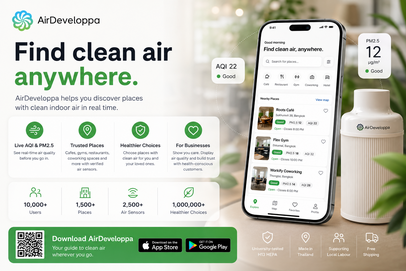
Indoor air quality finder driven by sensor data

Car-sharing app
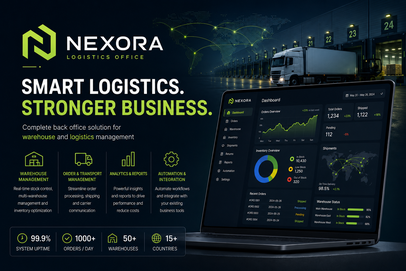
Warehouse and logistics management platform
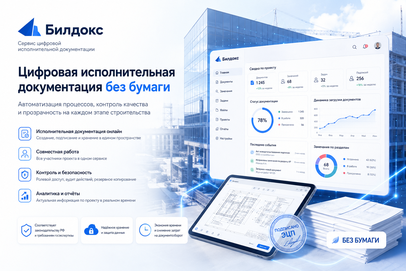
Digital as-built documentation
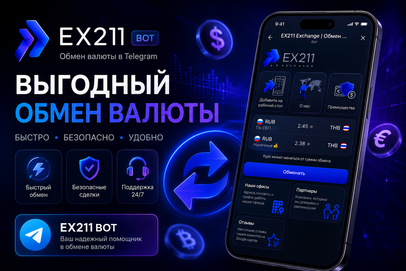
Telegram Mini App for currency exchange
Start with the flow that hurts
One site, one process, one measurable improvement. Warehouses do not reward big-bang projects, and neither do we.
A scoping week gives you the architecture, the integration map and a fixed quote.
Tell us what you need — we'll suggest the format and the timeline. We normally reply within one business day.
or write to us directly