SAP to open-stack ERP migration
Manufacturer, 500+ employees. Phased migration off SAP ERP onto an open stack with custom modules — run in stages while the plant kept working.
- 0 downtime
- 8 mo migration
- −40% on licences

A model that scores 98% on a clean dataset can be useless on your cameras: different light, different angles, dirty lenses and a network that drops frames.
What we can show you
Model choice is a week. Data collection, labelling and evaluation on your own footage are the months that decide whether it works.
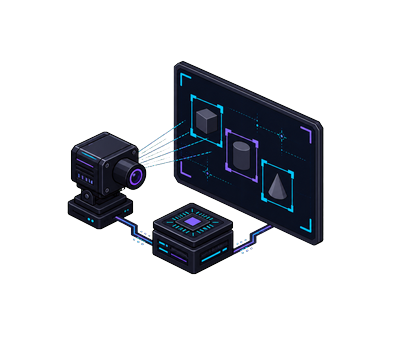
Five parts, and the model is the smallest of them. Problem definition in business terms — what counts as a miss and what it costs. Data: collection from your cameras, labelling, and a held-out set nobody trains on. Model: usually an existing architecture fine-tuned, occasionally a cloud API. Inference: where it runs — edge device, on-premise server or cloud — which decides both cost and privacy. Monitoring: quality drifts when the season, the lighting or the camera changes.
We start with a proof of concept on your own footage, because accuracy figures from anyone else's dataset predict nothing about your warehouse, shop floor or gate.
When a person is currently watching a screen and counting, when quality control is sampled and subjective, or when an error has a price you can calculate. If the process happens ten times a day, a person is cheaper — and we will say so before taking the project.
Price
PoC $7,990, production from $18,900
Timeline
PoC in 2–3 weeks
Payment
50/50 by milestone
The cheap answer is often the right one, and we test both on your data before recommending either.
Two numbers decide the project: measured quality on your data and cost per stream. Both are produced before production work starts.
A held-out set from your own cameras, an agreed definition of a miss, and a harness your team can re-run after any change. Published accuracy figures from vendors predict nothing about your conditions.
We do not quote an accuracy number before the proof of concept. Afterwards you get a measured one with the method attached — the same discipline as in our engineering report.
GPU or CPU time per camera, per hour, at the frame rate the task actually needs. Most vision projects die on the second invoice, not on accuracy.
Edge inference changes that maths and we model both options during the PoC.
Collection windows that cover night, weather and shift changes; a labelling workflow with agreed guidelines; and a review step, because inconsistent labels cap accuracy long before the model does.
Your data, your labels: everything stays in your accounts and is assigned to you at delivery.
Seasons change, lenses get dirty, someone moves a camera. Quality is monitored continuously with alerts, and retraining is a scheduled activity rather than an emergency.
Where footage cannot leave the building, inference and storage stay on-premise — see AI security audit.
Four things we can prove, rather than four adjectives.

Anyone quoting a percentage before seeing your footage is quoting someone else's dataset. We measure first and put the method in writing.

Compute per camera at the required frame rate, with the edge alternative priced beside it. That number kills more vision projects than accuracy does.
Footage, labels, trained weights and code are yours, with IP assigned at delivery. Nothing about the model is held as leverage.

If a standard cloud service solves it at your volume and privacy requirement, that is the recommendation — and it is a much smaller engagement for us.
Industries
Vision tasks are domain-shaped: pallet and label checks in logistics, defect detection on a line, occupancy and safety in property and retail.
Six answers that usually replace a discovery call.
Often the API is enough and cheaper — if your volume, privacy rules and conditions allow. We test both on your footage during the proof of concept.
It depends on the task and the variation in your conditions; the PoC establishes it. Labelling effort is estimated in hours, not waved away.
Yes, on edge hardware. That changes the cost and hardware plan, so we model both options before you commit.
None before the proof of concept. Afterwards, a measured number on your own held-out data with the evaluation method attached.
On-premise or edge inference where footage cannot leave, retention rules agreed in writing, and access control designed in rather than added later.
You do: footage, labels, trained weights and code, with IP assigned at delivery and a documented chain of title.
Manufacturer, 500+ employees. Phased migration off SAP ERP onto an open stack with custom modules — run in stages while the plant kept working.
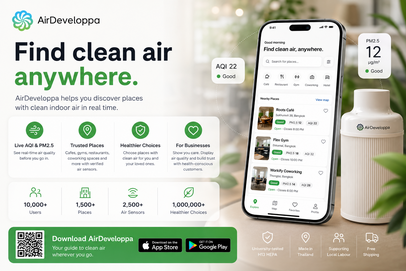
Indoor air quality finder driven by sensor data

Car-sharing app
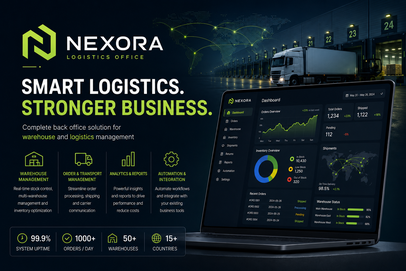
Warehouse and logistics management platform
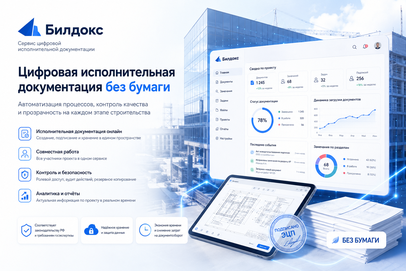
Digital as-built documentation

Telegram Mini App for currency exchange
Have cameras and a person watching them?
Send a sample of footage and what a miss costs you. You get a feasibility view, a cost-per-stream estimate and a fixed quote for a proof of concept on your own data.
Tell us what you need — we'll suggest the format and the timeline. We normally reply within one business day.
or write to us directly