SAP to open-stack ERP migration
Manufacturer, 500+ employees. Phased migration off SAP ERP onto an open stack with custom modules — run in stages while the plant kept working.
- 0 downtime
- 8 mo migration
- −40% on licences

The hard part of IoT is not the sensor. It is the connection that drops, the firmware you cannot recall, and a dashboard that has to stay honest when a third of the fleet is offline.
What we can show you
Device agent, transport, ingest, platform. Hardware design, manufacturing and certification are not on that list — and not on ours.
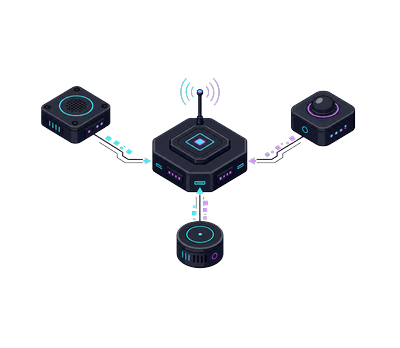
An IoT system is four layers of software. The device side buffers, retries and reports its own health. Transport carries messages over a network that will be unavailable more often than anyone plans for. Ingest validates, deduplicates and stores what arrives, including backfill from a device that woke up after two days. The platform handles provisioning, over-the-air updates, alerting and the screens people actually open.
We build all four in software. We do not design boards, manufacture devices or run certification: if that is what you need, you need a manufacturer first and us second. Saying this on the first call saves both sides a month.
When the device already exists and someone is reading numbers off it by hand; when the fleet has outgrown a spreadsheet; when downtime costs money, so alerting matters more than dashboards. If the device is still a sketch, start with the manufacturer — we will happily join at the point where it can send its first message.
Price
From $18,900
Timeline
4–6 weeks to a working telemetry path
Payment
50/50 by milestone
The honest comparison, including the cases where the vendor cloud wins and we lose the deal.
Four failure modes account for most rescued IoT projects. We design against them in week one.
Week 0 — scoping. Protocols, message volume, cost per device, offline rules and an explicit out-of-scope list. Fixed quote at the end of it.
Weeks 1–2 — telemetry path. One device end to end: agent, transport, ingest, storage. Everything else waits until that path is boring.
Weeks 3–4 — platform. Provisioning, alerting, dashboards, roles.
Hardening. Failure injection: kill the network, replay duplicates, send a device two days late — then ship.
Connectivity is assumed, not designed. Buffering, idempotent ingest and backfill are architecture, not bug fixes.
Updates are an afterthought. A fleet you cannot update over the air is a fleet you will replace by hand.
Telemetry has no schema. Six months in, three firmware versions send three shapes of the same field.
Costs scale with messages, not users. Per-message pricing turns a pilot into a budget problem at 10,000 devices.
MQTT or HTTP for transport; a gateway that normalises Modbus, OPC UA and vendor protocols; PostgreSQL with TimescaleDB for time series; Redis and queues for backpressure; Python or Node for services; Docker and GitHub Actions for delivery.
The platform runs in your cloud account, and infrastructure is code from day one — see DevOps services.
ERP and accounting, billing and metering, CRM, maintenance and ticketing systems, BI. Telemetry that never leaves the dashboard is a screensaver.
Integration starts with an audit: what data moves, in which direction, and which system wins when two disagree — see API and integration.
Four things we can prove, rather than four adjectives.
Queues, retries, idempotent ingest and dead letters before the first device ships. Offline is the normal state of a fleet, not the error case.
Message volume, storage and egress estimated during scoping and capped in code. You pay cloud and connectivity providers directly, at cost, with no mark-up.
The platform runs in your account, the repository is yours from the first commit, and IP is assigned at delivery with a documented chain of title.
A senior engineer who did not write the code reviews it — including code an AI drafted. In IoT that review is what keeps a silent data-loss bug out of a fleet you cannot recall.
Industries
Telemetry means different things by domain: fleet and cold chain in logistics, line uptime in manufacturing, metering in utilities, occupancy in property.
Seven answers that usually replace a discovery call.
No. We write the software: device agent, gateway, ingest, platform and integrations. Board design, manufacturing and certification are someone else's job, and we say so on the first call.
MQTT and HTTP by default; Modbus, OPC UA and vendor protocols through a gateway. If your device speaks something exotic, the gateway is where that gets normalised.
Buffering on the device, idempotent ingest on the server and backfill when it reconnects. Offline is the normal state of a fleet, not the error case.
Yes, with staged rollouts and rollback. Designing OTA after the fleet ships is possible but expensive, so we raise it during scoping rather than after.
Cloud and connectivity are billed by message volume and storage. We model that per device during scoping and put a cap in code; you pay the providers directly, at cost.
That is usually the point of the project. It starts with an integration audit — see API development and integration.
Yes, after a paid audit of the ingest path, the data model and the update mechanism — the three places where these systems hurt.
Manufacturer, 500+ employees. Phased migration off SAP ERP onto an open stack with custom modules — run in stages while the plant kept working.
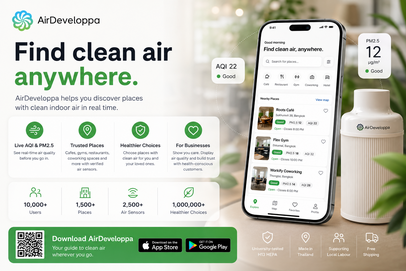
Indoor air quality finder driven by sensor data

Car-sharing app
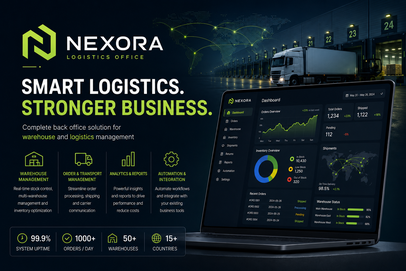
Warehouse and logistics management platform
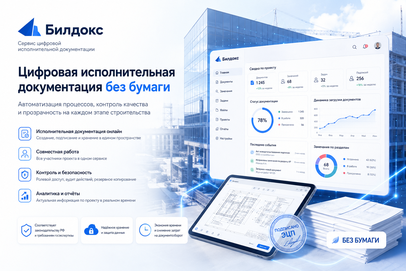
Digital as-built documentation
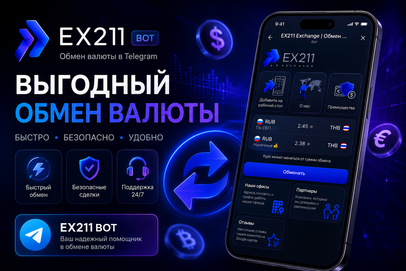
Telegram Mini App for currency exchange
Have a device and no platform behind it?
Send the protocol and the expected message volume. You get an architecture sketch, a cost-per-device estimate and a fixed quote for the telemetry path — before any contract.
Tell us what you need — we'll suggest the format and the timeline. We normally reply within one business day.
or write to us directly