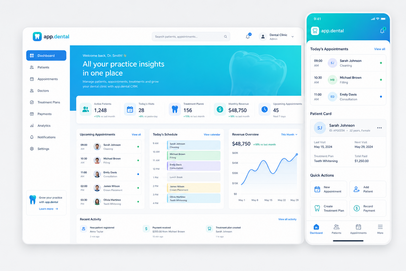
SAP to open-stack ERP migration
Manufacturer, 500+ employees. Phased migration off SAP ERP onto an open stack with custom modules — run in stages while the plant kept working.
- 0 downtime
- 8 mo migration
- −40% on licences

Nobody buys a product for its admin panel, and plenty of companies run on one. Django is what you choose when the internal side is the real system.
What we can show you
ORM, migrations, authentication, permissions and an admin — the parts most products rebuild badly are already there and already tested.
Django is opinionated in the places that matter for business systems: how data is described, how schema changes are applied, how users and permissions work. That is why a small team can run a large internal system with it, and why handover to another team is usually painless.
The trade is that Django expects to own the request cycle. For heavily async, I/O-bound services, FastAPI fits better — and both live happily in the same product when the split is drawn deliberately.
When the product has an operations side with roles and approvals, when reporting matters, or when a small team must maintain a large system. For a pure async API surface with no admin, FastAPI is the better tool and we will say so.
Price
From $7,990
Timeline
3 weeks to first release
Payment
50/50 by milestone
Both are Python and both are right — for different halves of a product, sometimes in the same product.
Where this stack earns its place in a project, and what we would use instead if it did not.
Roles, approvals, audit trail, bulk actions and imports — the screens your operations team lives in.
Typed, documented endpoints for a mobile app or a separate front end, with permissions enforced server-side.
The numbers finance actually asks for, generated reliably rather than assembled by hand each month.
Celery or equivalent for imports, notifications and scheduled work that must be re-runnable.
The best stack is usually the one your team can maintain after we leave.
Products where the internal interface carries the value: operations, back office, marketplaces with moderation, systems with real permission rules.
A pure API service with heavy async I/O and no admin: FastAPI is a better fit, and it is on our Python page.
Rates
$28–55/hour by role
Fixed builds
From $7,990
Discounts
Dedicated −10% · partners −15%
The part that is specific to this stack rather than true of every project.
Four things we can prove, not four adjectives.

List views, filters, bulk actions, imports with validation and an audit trail — the difference between a developer tool and something operations can use all day.
Rules in one place, covered by tests. Permission logic scattered through views is the most common security finding in Django audits.
Reversible where possible, rehearsed on a copy, applied by CI rather than by the one person who remembers the order.
Code, CI and infrastructure as code in your accounts, IP assigned at delivery with a documented chain of title.
Industries
Django runs the back offices we build for logistics, property and marketplaces — wherever moderation, roles and reporting are the product.
Answered by the people who would do the work, not by a sales team.
Django when there is an operations side with roles, approvals and reporting; FastAPI for async, I/O-heavy API services. Using both in one product is often the right answer.
Far enough for most operations teams: custom list views, filters, inline editing, bulk actions, imports with preview and an audit trail. Past a guided multi-step workflow, a purpose-built screen is cheaper, and we will tell you where that line is.
DRF by default — simpler to cache, monitor and hand over. GraphQL when clients genuinely need to shape their own queries.
Usually: additive changes first, backfill, then the destructive step once nothing reads the old shape. Rehearsed on a copy before it touches production.
Yes, with retries, dead letters and alerting. A background job that fails silently is worse than one that never ran.
Yes, after a paid audit of the models, the permission logic, the migration history and the test coverage — the four places these systems hurt.
Manufacturer, 500+ employees. Phased migration off SAP ERP onto an open stack with custom modules — run in stages while the plant kept working.
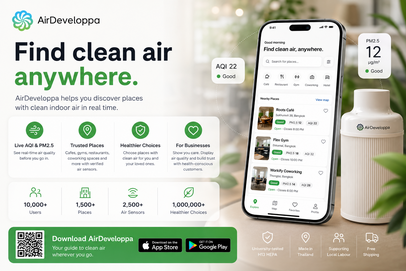
Indoor air quality finder driven by sensor data

Car-sharing app
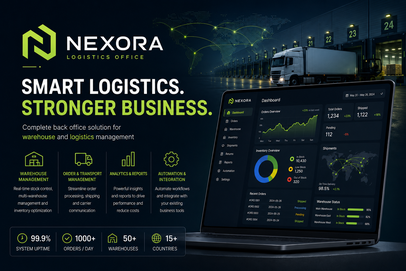
Warehouse and logistics management platform
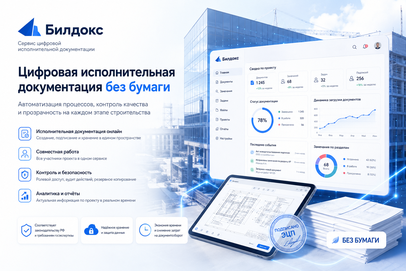
Digital as-built documentation
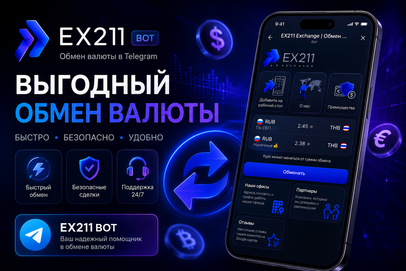
Telegram Mini App for currency exchange
Need this stack with a senior review included?
Tell us what exists today — a green field, a legacy codebase, or a team that needs two more pairs of hands. We answer with a scope, a price and a date.
We do not take work on a stack we cannot review internally at senior level.
Tell us what you need — we'll suggest the format and the timeline. We normally reply within one business day.
or write to us directly