SAP to open-stack ERP migration
Manufacturer, 500+ employees. Phased migration off SAP ERP onto an open stack with custom modules — run in stages while the plant kept working.
- 0 downtime
- 8 mo migration
- −40% on licences

Most disappointment with cloud comes from one omission: nobody modelled the monthly bill before the migration, so «cheaper» turned out to mean «differently expensive».
What we can show you
There is no single cloud migration. There are three strategies, and most systems need a different one per component.
A migration is three decisions repeated per component. Rehost — move the virtual machine as it is: fastest, least benefit. Replatform — swap the database or queue for a managed service: moderate work, most of the operational gain. Refactor — change the application to use cloud primitives: expensive, justified only where it removes a real constraint.
Which one applies is a per-component answer, and it depends on licences, data gravity, compliance and how much the team can operate afterwards. That is what the assessment produces — along with a modelled monthly bill, which is the number people actually get wrong.
Justified when hardware is at end of life, when scaling means procurement, or when a single person is the only one who can rebuild the environment. Not justified when the workload is steady, well understood and already cheap on owned hardware: we will say so, and moving back from cloud is a legitimate project we also take.
Price
Assessment $1,790, migration from $18,900
Timeline
Assessment in 5 days
Payment
50/50 by milestone
Three strategies, and the honest answer is usually «different ones for different components».
The cost model is the part most vendors skip — it is the first thing we produce.
We price the target architecture component by component: compute, storage, managed database, egress, inter-zone traffic, backups and support plan. Egress and cross-zone traffic are where estimates usually fail, so they get their own line.
The gap between the modelled bill and the first real invoice is a number we track — it belongs in the report, not in a surprise.
Terraform or equivalent from the start, so staging and production are the same thing with different sizes, and rebuilding the environment is a command rather than a memory.
Nothing is configured by hand in a console, because a hand-built cloud is a new bus factor of one.
Every data migration is rehearsed on a copy: row counts, integrity checks, a data-quality report and a documented cutover with a rollback window.
For large datasets we plan the transfer method and the freeze window explicitly rather than hoping the link holds.
Staged cutover by component with rollback available at each step; unavoidable windows agreed in advance and kept short.
Thirty days after the move we review actual spend against the model and tune what is over-provisioned — see DevOps services.
Four things we can prove, rather than four adjectives.

We take no commission from AWS, Azure or GCP and do not resell their capacity. The recommendation follows your licences and your team, not our margin.

A per-component monthly estimate before the move, including egress and inter-zone traffic — the two lines that turn a cheap migration into an expensive one.

Staged cutover with a way back at each component. No single weekend decides whether your business trades on Monday.
The environment is code in your repository, with a runbook a new engineer can follow. If you never call us again, nothing stops working.
Industries
Data gravity and compliance differ by domain: warehouses and lines cannot pause, property portals cannot lose listings, finance cannot lose an audit trail.
Six answers that usually replace a discovery call.
Weeks per component, staged, with rollback at each step. The assessment produces a per-component plan before anything moves.
Whichever your team can actually operate and your licences favour. We are not a reseller and earn nothing from the choice.
Sometimes. We model the monthly bill before the move; if the honest answer is no, you get that in writing rather than in the first invoice.
Yes. Repatriation and cloud-to-cloud moves are legitimate projects, and infrastructure as code is what makes them possible without a rewrite.
Staged cutover with a rollback window. Where a freeze is unavoidable it is agreed in advance and kept as short as the data allows.
Optional. DevOps support from $790 a month, or a clean handover with a runbook your team can follow — both are real options, not one disguised as the other.
Manufacturer, 500+ employees. Phased migration off SAP ERP onto an open stack with custom modules — run in stages while the plant kept working.
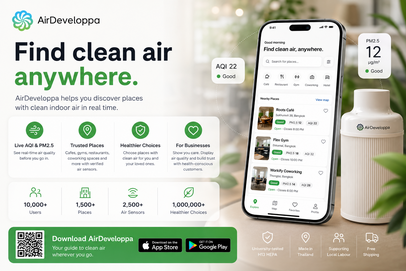
Indoor air quality finder driven by sensor data

Car-sharing app
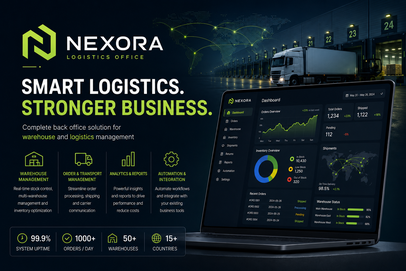
Warehouse and logistics management platform
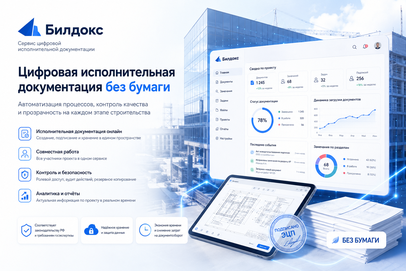
Digital as-built documentation

Telegram Mini App for currency exchange
Have hardware at end of life or a cloud bill that keeps growing?
Send an inventory of what runs where. You get a per-component strategy, a modelled monthly bill and a staged plan — before any commitment.
Tell us what you need — we'll suggest the format and the timeline. We normally reply within one business day.
or write to us directly