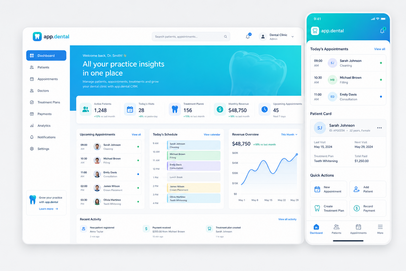
SAP to open-stack ERP migration
Manufacturer, 500+ employees. Phased migration off SAP ERP onto an open stack with custom modules — run in stages while the plant kept working.
- 0 downtime
- 8 mo migration
- −40% on licences

Drafting, extraction, summarisation and classification — with the boring parts included: human review where it matters, evaluation you can rerun, and a cost ceiling your finance team signed off.
What we can show you
Generative AI reads and drafts well, and decides badly. Every feature we ship keeps a human where the stakes are real.
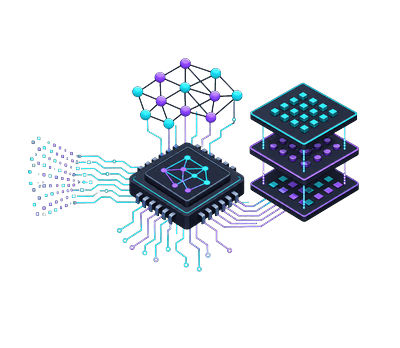
Generative AI produces text, structure or classification from unstructured input: an invoice becomes rows, a contract becomes a summary, a support thread becomes a routed ticket. It is good at reading and drafting, and unreliable at deciding — which is why every feature we ship has a human in the loop where the stakes are real.
The engineering is not the model call. It is the grounding, the review queue, the evaluation set and the cost ceiling that turn a demo into something a compliance officer will sign off.
When the same unstructured input arrives in volume and a person currently reads all of it. If the volume is ten documents a week, a person is cheaper than a project — and we will say so before you spend anything.
Price
From $10,900
Timeline
3–5 weeks
Payment
50/50 by milestone
Where a subscription tool is enough, and where it stops being enough.
Four generative patterns that pay for themselves, and one interface that decides whether they do.
Invoices, contracts and forms into structured data, with confidence scores and a review queue for anything below the threshold.
Proposals, replies and summaries seeded from your own past work. Nothing is sent unreviewed — the draft is the product.
Intake triage that explains its reasoning, so the person who disagrees with it can see why it decided that.
Product descriptions, translations and metadata at catalogue scale, with sampling-based quality control instead of blind trust.
Confidence thresholds decide what auto-processes and what queues for a person. The review interface is part of the deliverable, because that is usually where the return actually lives: a reviewer approving in three seconds beats a model being right 92% of the time and accountable to nobody.
Feature in your product
From $10,900
Timeline
3–5 weeks
Full generative product
From $35,900
We would rather answer these on a web page than in a questionnaire three weeks into procurement.
Zero-retention API configurations · no client data used for training · PII redaction before the model call where the task allows it · a full audit trail of prompts, outputs and approvals · model choice that respects data residency, including local models · a monthly cost cap enforced in code.
Everything above is written into the data processing agreement, not just into a sales deck.
Four things we can prove, not four adjectives.

Confidence thresholds decide what auto-processes and what queues for a person. The review interface ships with the feature, because that is where the return actually lives.

A labelled set from your own documents, scored in CI. You see the accuracy number and the threshold behind it before anything goes live.
Zero-retention configurations, PII redaction where the task allows, and a full audit trail of prompts, outputs and approvals.

Inference is passed through at cost against a monthly ceiling you set — no token mark-up and no surprise invoice.
Industries
Document-heavy work is where this pays: logistics paperwork, insurance claims, property contracts and e-commerce catalogues.
What corporate buyers ask before the pilot.
Grounding in your data, permissions, an audit trail, evaluation and cost control. A chat window is a tool; this is a feature with an owner and a test suite.
Task-dependent and measured on your documents. We publish the number and the confidence threshold that drives auto-processing, so you decide the trade-off rather than inheriting ours.
Yes, with local or region-pinned models. We will tell you the quality trade-off honestly rather than pretending there is none.
Your people, in an interface we build, with the queue ordered by confidence so attention goes where it is needed.
Modelled in week one and capped in code. Most features land in the tens to low hundreds of dollars a month; inference is passed through at cost.
The integration is abstracted: swapping providers is a configuration change plus a rerun of the evaluation set.
Manufacturer, 500+ employees. Phased migration off SAP ERP onto an open stack with custom modules — run in stages while the plant kept working.
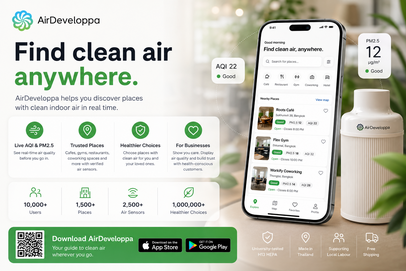
Indoor air quality finder driven by sensor data

Car-sharing app
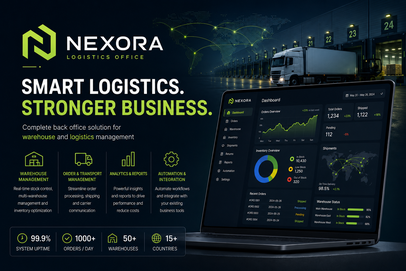
Warehouse and logistics management platform
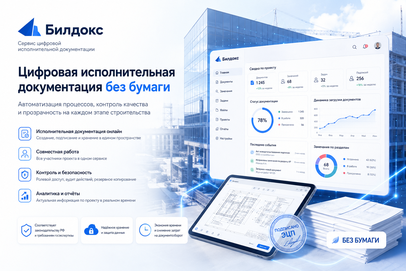
Digital as-built documentation

Telegram Mini App for currency exchange
Start with one document type
Pick the highest-volume, most annoying document in your process. One week of feasibility tells you the accuracy, the cost per document and whether it is worth automating at all.
If the honest answer is "a template and a macro", you will hear that.
Tell us what you need — we'll suggest the format and the timeline. We normally reply within one business day.
or write to us directly