SAP to open-stack ERP migration
Manufacturer, 500+ employees. Phased migration off SAP ERP onto an open stack with custom modules — run in stages while the plant kept working.
- 0 downtime
- 8 mo migration
- −40% on licences

We build software for not quarters
What we can show you
We add senior engineers to the team you already have: backend, frontend, mobile, QA, DevOps and analysts.
Staff augmentation means our engineers work inside your team: your backlog, your tracker, your ceremonies, under your direct management.
Everything an employer carries — payroll, taxes, holidays, sick leave, equipment — stays with us.
Price
From $28/hour · time and materials
Timeline
First engineer starts in 2 weeks
Payment
By milestone · 30% / 30% / 40%
PHP (Laravel), Python, Node.js, Java, C#/.NET and Go. Product engineers: APIs and integrations, high-load services, legacy migrations.
Most often taken for two or three months to reinforce an existing team when hiring can't keep up with the release plan.
Manual and automated testing (Python, Java, JS), regression suites and load checks.
They build a QA process from scratch or reinforce yours — for when releases started breaking more often than shipping.
CI/CD, Docker, Kubernetes, monitoring and resilience — working inside your infrastructure, by your rules.
If you need the infrastructure built rather than an engineer embedded, see our DevOps work.
Business and systems analysts: gathering requirements, writing them down for developers, specifying integrations.
They help where code gets written faster than requirements get decided. As a project instead, see discovery and analysis.
Engineers who work on systems nobody wants to touch: ERP customisation, integrations with CRM and accounting, and support of business-critical legacy.
Usually embedded into integrator teams and in-house IT departments, on a project or ongoing basis.
The exact rate comes down to four things — we name it after a short call about the role and the stack:
The rate already covers everything an employer pays on top of a salary: taxes, holidays, sick leave, equipment and workspace. Send us the role and the stack — we come back with candidates and a number.
The engineer works in your team while the employer's duties stay with us:
The rights to the code and everything produced are yours, stated in the contract.
If the engineer isn't right for the team, or leaves, we replace them and hand over the context — and you don't pay for the replacement's ramp-up.
Replacement candidates arrive within five working days; cover for planned leave is arranged in advance.
Augmentation makes sense from one month of full load; for anything shorter we'll honestly suggest a fixed-price project paid for the outcome instead.
Ending it takes 30 days' notice — no severance, no legal tail. Scale the team to the load you actually have.

Our engineers don't come off a bench — they come off our own projects: business systems, fintech, e-commerce, logistics, mobile.

Mid-level from $28 an hour, senior $38, tech lead $45 — with no recruitment fee, no holidays to fund and no workspace to pay for.

We don't send trainees to learn at your expense. Every engineer takes sprint tasks from week one, and every one of them is interviewed by you first.

The engineer works in your process and your tracker like an employee, without the employer's obligations.
Industries
We build with the domain in mind — from fintech and retail to manufacturing and healthcare.
In augmentation our engineer joins your team: you manage the work and pay for hours actually worked. Dedicated development team services are the other shape: a nearshore development team — or an offshore development team where the rate matters more than the overlap — that we manage end to end.
QA from $25 an hour, mid-level engineers from $28, senior $38, tech lead $45.
Two weeks from the first call in the normal case: days for the brief, candidates by the end of the first week, interviews and paperwork, onboarding in week two.
You do. They work to your sprints, in your tracker, at your standups.
We replace them and don't bill the replacement's ramp-up: new candidates within five working days, with the task context handed over so the team keeps moving.
A services agreement plus an SLA; the NDA is signed during the first conversations, before any project data is shared.
One month of full load. For anything shorter, augmentation is usually the wrong instrument and we'll say so — a fixed-price project is cheaper for you.
A written report of hours and tasks every month, and the work itself sits in your tracker where you see it daily. You pay only for hours actually worked.
Yes — engineers who work on ERP customisation, integrations and business-critical legacy are one of our strongest lines.
After twelve months of work together you can hire them directly with no buy-out fee.
Manufacturer, 500+ employees. Phased migration off SAP ERP onto an open stack with custom modules — run in stages while the plant kept working.
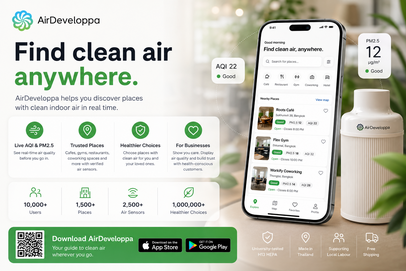
Indoor air quality finder driven by sensor data

Car-sharing app
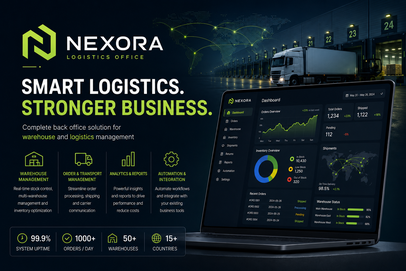
Warehouse and logistics management platform
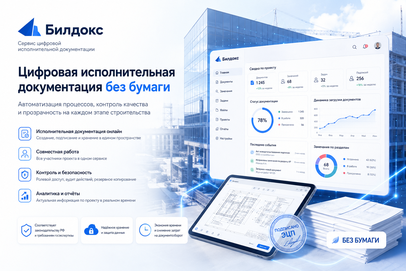
Digital as-built documentation

Telegram Mini App for currency exchange
The next product that works could be yours.
Let's build it.
Tell us what you need — we'll suggest the format and the timeline. We normally reply within one business day.
or write to us directly