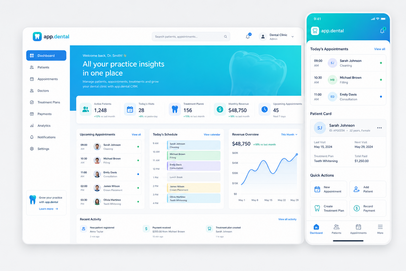
SAP to open-stack ERP migration
Manufacturer, 500+ employees. Phased migration off SAP ERP onto an open stack with custom modules — run in stages while the plant kept working.
- 0 downtime
- 8 mo migration
- −40% on licences

Not a website with a login. An application: roles and permissions, real data, payments, an admin your operations team can actually use, and a deployment that does not depend on one person's laptop.
What we can show you
A website presents; an application does work — state, permissions, transactions. The price difference lives in those three words.
A web application keeps state, enforces who may do what, and moves money or goods. That is why it needs a data model, server-side permission checks, migrations and tests — while a website needs pages. Everything expensive about the work sits in that difference, not in the design.
Custom web application development starts from your process and builds the software around it. An off-the-shelf platform does the opposite: it gives you its process and asks you to adapt. Both are legitimate — the question is which one your business can afford to change.
Build when the process is your competitive advantage, when per-seat licences have outgrown the cost of owning the software, or when the platform cannot express your permission rules and integrations. If a $50-a-month tool already does the job, we will say so on the first call — and if you need a first version fast rather than a full system, look at MVP development.
Price
From $7,990
Timeline
3 weeks to first release
Payment
50/50 by milestone
The honest comparison, including the cases where the platform wins and we lose the deal.
Weekly working software instead of status reports, and a stack chosen for maintenance rather than fashion.
Week 0 — scoping. Flows written down with an explicit out-of-scope list, architecture, risks, fixed quote.
Days 3–5 — screens. A clickable prototype of every screen; you click it before we build it.
Weeks 1–2 — build. Daily commits to your repository, mid-week demo, senior review on every merge.
Final week — hardening. QA pass, performance, error tracking, deployment, handover call and runbook.
Server-side permission checks on every endpoint · migrations and reproducible environments · automated tests on the flows that make money · CI that blocks a red build · error tracking and uptime monitoring from day one · backups that have actually been restored once.
Any team can demo a web app. This list is the difference between a demo and something you can charge money for.
Laravel or NestJS where the domain is heavy on business rules; React, Vue or Nuxt on the front end; PostgreSQL by default; Redis for queues and caching; Docker and GitHub Actions for delivery.
Every exception is justified in the scoping document, because the stack is a maintenance decision. We do not take work on a stack we cannot review internally at senior level — see technologies.
Payments (Stripe, Paddle) with webhooks and reconciliation · ERP and accounting · CRM · carriers and postal APIs · SSO and directory services · analytics and product telemetry.
We start with an integration audit: what data moves, in which direction, and which system wins when the two disagree.
Four things we can prove, rather than four adjectives.

A senior engineer who did not write the code reviews it — including code an AI drafted. That is the part we deliberately do not compress, and it is inside the price rather than an upsell.
Scope is written into the SOW, the price does not drift, and on packages with a date commitment we keep working at no extra cost if we miss it for reasons on our side.
Code, infrastructure as code and design sources live in your accounts from the start. IP is assigned at delivery with a documented chain of title — the thing investors' lawyers ask for first.

Rates and packages are on the site, and the AI speed-up we claim is measured against our own pre-AI baseline with the method published in the engineering report.
Industries
The data model follows the domain: logistics, real estate, e-commerce and manufacturing each bring their own rules, integrations and regulators.
Six answers that usually replace a discovery call.
A website presents; an application does work — it keeps state, enforces permissions and handles transactions. The price difference lives in those three words.
From $7,990 for a focused first version with up to three flows, $18,900 for a multi-role system with integrations and tests. Hourly work is $28–55 by role.
Three weeks to a first release, six to eight weeks for a multi-role system. A scoping week comes first on anything above $18,000.
Yes, starting with a paid audit of the code, data model and infrastructure, so nobody estimates blind. The audit tells you whether to refactor or replace screen by screen.
Yes: design system, screens and a clickable prototype before any code. Or we work inside your existing design system and tell you where it will be expensive.
Your cloud account and your repository, from the first commit. We set up infrastructure as code and hand over the keys with a runbook.
Manufacturer, 500+ employees. Phased migration off SAP ERP onto an open stack with custom modules — run in stages while the plant kept working.
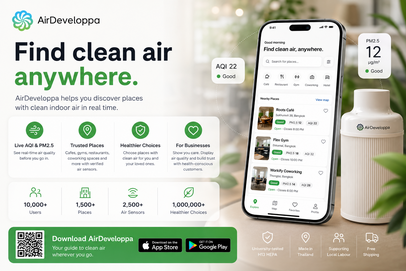
Indoor air quality finder driven by sensor data

Car-sharing app
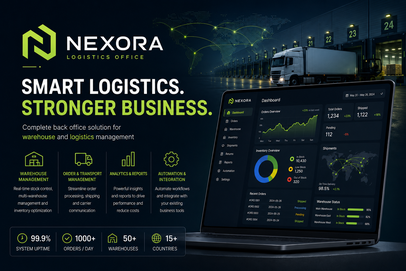
Warehouse and logistics management platform
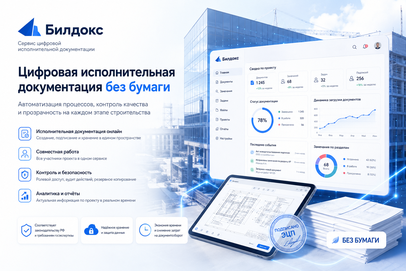
Digital as-built documentation

Telegram Mini App for currency exchange
Bring the flow that matters most
Describe the one user journey that has to work perfectly — that is enough for us to size the build and tell you what it costs.
You get a clickable prototype of it within 48 hours, free, one per company.
Tell us what you need — we'll suggest the format and the timeline. We normally reply within one business day.
or write to us directly