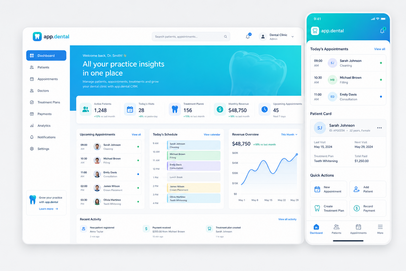
SAP to open-stack ERP migration
Manufacturer, 500+ employees. Phased migration off SAP ERP onto an open stack with custom modules — run in stages while the plant kept working.
- 0 downtime
- 8 mo migration
- −40% on licences

The hard part is not calling the API. It is adding a probabilistic component to a deterministic product without breaking the contract you already have with your customers.
What we can show you
Adding a probabilistic component to a deterministic product is the hard part — not the API call. That is what this service covers.
Adding an LLM to a product that already has users is not an API call. It is adding a probabilistic component to a deterministic system without breaking the promises the product already makes — about permissions, about latency, about what happens when something fails.
That means grounding data with permissions preserved, versioned prompts, an evaluation set in CI, budgets enforced per request, a fallback path and a feature flag that switches the whole thing off without a deploy.
When you have a product, users and data, and one clear place where a model would help. If the data is not accessible yet, the first project is a data project — and pretending otherwise wastes a quarter.
Price
From $10,900
Timeline
3–5 weeks
Payment
50/50 by milestone
The difference between a feature that survives its second month and a demo that quietly gets switched off.
Six layers. Skipping any of them is how a working demo becomes an incident three weeks after launch.
Grounding layer. Your data, chunked and indexed with permissions preserved, so the model cannot answer from documents this user may not see.
Prompt and schema management. Versioned, tested, deployable independently of the app release.
Evaluation. A labelled set from your real cases, scored in CI, with regression gates before merge.
Cost and latency control. Budgets per request, caching, model routing — small model first, escalate only when needed.
Failure design. Timeouts, fallbacks, and a feature flag that turns the whole thing off without a deploy.
Observability. Traces per request, quality and cost dashboards, alerting on drift.
Feature in your product
From $10,900
Timeline
3–5 weeks
Ongoing tuning
Core subscription $2,990/month
Vendor lock-in in this space is a self-inflicted wound: the integration should make switching a configuration change.
Frontier hosted models where quality decides. Smaller or open models where cost, latency or data residency decides. Local models when the data cannot leave your perimeter — with the quality trade-off stated plainly rather than hidden.
Whatever we pick, orchestration and model stay swappable, and switching means re-running the evaluation set rather than rewriting the feature.
Four things we can prove, not four adjectives.

Your data indexed so the model cannot answer from a document this user may not open — the failure mode that ends pilots.
A labelled set from your cases, scored in CI, with regression gates before merge. The number is visible before launch and tracked after.
Orchestration and model are abstracted, so switching is a config change plus an eval rerun rather than a rewrite.
Timeouts, fallbacks and a feature flag that disables the feature without a deploy. The product keeps working when the model does not.
Industries
LLM features land first where text is the bottleneck: support, sales operations, legal review and internal knowledge.
What engineering leads ask before letting a model near their product.
Yes — that is the entire point of this service. We start with a short audit of the data model and the permission system, because those decide what grounding is even possible.
Budgets in code, caching, model routing and a monthly cap. You get a cost-per-request dashboard rather than a surprise invoice.
Fallback provider or a degraded mode behind a feature flag. The product keeps working without the feature — that is designed in, not bolted on.
A labelled set built from your cases, scored in CI, with the number visible before launch and tracked after it.
No: zero-retention configurations plus contractual terms saying the same thing.
You do. They ship with the code, in your repository, and they are as much of the deliverable as the feature itself.
Yes — RAG development services are the most common single request here: retrieval over your own documents, grounded answers with citations, and an evaluation harness that proves the answers stayed correct after the next change.
Manufacturer, 500+ employees. Phased migration off SAP ERP onto an open stack with custom modules — run in stages while the plant kept working.
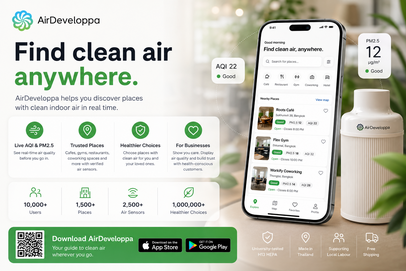
Indoor air quality finder driven by sensor data

Car-sharing app
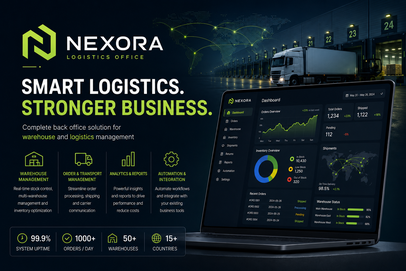
Warehouse and logistics management platform
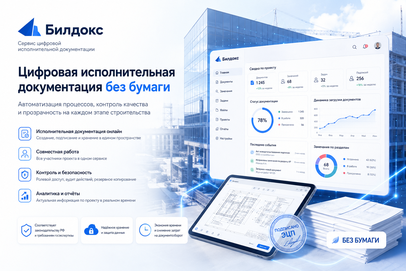
Digital as-built documentation
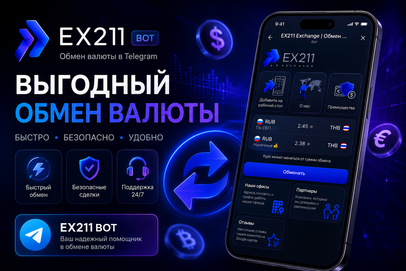
Telegram Mini App for currency exchange
Bring one feature, not a strategy
Pick the single place in your product where a language model would obviously help. We will tell you what grounding it needs, what it costs to run, and what could go wrong.
If your data is not accessible yet, the first project is a data project — and we will say so.
Tell us what you need — we'll suggest the format and the timeline. We normally reply within one business day.
or write to us directly