We build software for not quarters

AI development

AI development for products that have to keep working on Monday

Demos are easy. Production is where an assistant meets the tenth edge case, a data migration and an angry customer. We take the whole cycle: feasibility, a proof of concept on your data, integrations and production, with evaluation in CI.

What AI development means and when it's worth doing

AI development isn't buying a model — it's putting one inside a process that already exists: where people manually sort requests, read documents and answer the same questions all day, a model can take the routine and leave the judgement. Unlike a public chat tool, a custom build works on your data, inside your security perimeter, on your task.

When you shouldn't hire us for AI

If a rule solves it, use the rule — deterministic beats probabilistic on anything auditable.
Signs it's time

  • people spend hours on the same kind of requests, emails, documents and calls;
  • you have data — deals, tickets, transactions, images — that never turns into a decision;
  • support can't keep up with routine questions around the clock;
  • forecasting demand, churn and risk is done by feel rather than by model;
  • you tried a public chat tool and can't put company data into it.
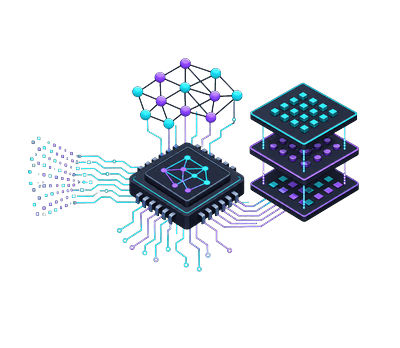
Signs a business is ready for AI: routine handling of requests and documents, data nobody analyses, support around the clock

Price

Feasibility $4,490 · PoC from $7,990 · features from $10,900

Timeline

2 weeks to 3 months

Payment

By milestone · 30% / 30% / 40%

Services

What we build with AI

From a single assistant to a production model — here is what we build most often.

Agents and assistants

Agents that do work rather than talk about it: multi-step flows with typed tool access, approval gates on anything irreversible, and a full trace of every step they took. A chatbot answers, an assistant helps a person, an agent completes the task — and the difference is accountability, not cleverness.

Support chatbots and voice

Grounded support bots that deflect the boring half of tickets and hand over cleanly, with the conversation and context landing in your helpdesk. our messenger work.

Models and predictive analytics

Models trained on your data: demand and revenue forecasting, churn, scoring and risk, anomaly and fraud detection, dynamic pricing. BI & analytics.

Vision and document understanding

Quality control on a production line, counting and event detection on video, biometric authentication. High-volume document intake is covered by document extraction (OCR/IDP).

Automation of the routine

Software robots move data between systems, fill in documents and reconcile registers where no API exists. For end-to-end process automation see not quarters.

Recommendations and personalisation

Product and content recommendations, next-best-offer, semantic search over a catalogue or knowledge base — measured against a held-out set, not against a hunch.

Impact

Where AI actually pays for itself

AI pays where there is a lot of repetitive manual work and data already exists. Here is what changes, function by function.

Function
Without AIhow it works now
With AI in placewhat changes
Customer service
Agents answer the same questions by hand; at night and at peak the queue grows and tickets get lost.
Cover around the clock without more headcount. The assistant answers the routine questions and hands the rest to a human with the full conversation and context attached.
Sales and marketing
Leads are worked when there's time; personalisation is manual and approximate.
Faster and better targeted. Leads are qualified and prioritised automatically, with drafted follow-ups a human still sends.
Documents and back office
People retype data from invoices, contracts and emails into systems.
Documents are processed automatically. Extraction reads the document into structured fields with a confidence score, and anything below the threshold goes to a review queue.
Finance and risk
Forecasting and risk live in spreadsheets; anomalies are noticed after the fact.
Models instead of intuition. Models forecast demand and cash flow and flag anomalies as they happen.
Logistics and warehousing
Stock and routes are planned from experience; demand is guessed.
Optimisation on data. Models forecast demand and optimise stock and routing — less money frozen in inventory, fewer idle runs.
Manufacturing and quality
Quality control is visual and human, with the errors that tiredness brings.
Vision on the line. Cameras and models catch defects, count objects and check procedure without the human factor.
Cost

What custom software AI development

AI work starts at $4,490. The price depends on the number of integrations, the accuracy required and how clean the data is. A proof of concept takes two weeks; the estimate is free.

AI feature in production

from $18,900

Grounding, integrations with your systems, evaluation in CI, monitoring and cost caps

3–5 weeks

Full AI product

from $35,900

Multi-tenant product, several agents, roles and permissions, MLOps and scale

3–5 weeks

Engineers in your team

hourly

AI engineers embedded in your team, under your management

from 2 weeks

What moves the price: the approach (retrieval over your data versus training your own model), the volume and quality of that data, the number of integrations, the accuracy and latency you need, and whether it runs in the cloud or on your own hardware. Rights to the code, models and data are entirely yours.

Process

How we build AI

We work iteratively: an inexpensive proof of concept on one process with a measurable result, then scale. You see the effect before the large commitment. how we work.

How an AI project runs

Each stage ends with something you can check before the next one starts.

  1. Feasibility review — 3–5 days.
    We find where AI pays back fastest, assess whether the data supports it, and agree the metric that defines success.
  2. Proof of concept — 2 weeks.
    A working solution on real data, scored on a labelled set from your own cases.
  3. Build and integration — 3–5 weeks.
    Connected to your CRM, ERP, telephony and product, with permissions, guardrails, tracing and quality monitoring.
  4. Production and iteration.
    We tune on new data, watch accuracy and cost against the gates, and extend to the next process.

Technology

Frontier hosted models and smaller or local ones where residency, latency or cost decide; retrieval over your data; PyTorch and TensorFlow where a model has to be trained rather than prompted; OCR and detection for documents and images; and MLOps so the thing keeps working after launch. Model choice is settled by measurement on your data, not by preference.

Models can run inside your own perimeter, so the data never leaves it. Need only the people? We can embed engineers into your team through staff augmentation.

We connect AI to the systems you already run — CRM, ERP, telephony, your website and messengers — through their APIs. AI system testing.

Comparison

Your own build or an off-the-shelf tool — which one

A public tool starts faster on simple tasks; a custom build wins when your data, permissions, accuracy and integrations matter.

What differs
Off-the-shelfChatGPT / GigaChat
Built for youcustom AI development
Working with your data
A general model; putting company data into it is a risk
Grounded in your data, inside your perimeter, with permissions preserved
Security and data residency
Data leaves for an external provider
Zero-retention configurations, or local models when data can't leave
Accuracy on your task
Averaged answers about everything
Retrieval and evaluation tuned to your domain
Integrations
Limited, through third-party connectors
Direct integration with CRM, ERP, telephony and your product
Doing work, not just answering
Answers in a chat window; takes no action
Agents complete multi-step tasks behind approval gates
Rights and cost of ownership
Per-seat subscription and vendor lock-in
100% of the rights to the code, no per-seat fee, model swappable by configuration
Why us

Why teams bring AI work to Cast & Ship

We start small, measure honestly and stay after launch under an SLA — details on the page about our guarantees.

230+ projects in 17 years

We've delivered custom software and automation across fintech, retail, manufacturing, logistics and healthcare.

Proof of concept in 2 weeks

A working feature on your own data before any large commitment — measured on a labelled set from your real cases, not demonstrated on a slide.

30–50% below market

A feasibility review costs $4,490 and a feature starts at $10,900, where specialist AI studios quote $45,000 and up.
The whole cycle in one team

Feasibility, build, evaluation, integration and support in one team — and we can embed engineers into yours if you'd rather own it.

Industries

AI development across your business

We build with the domain in mind — from healthcare and retail to manufacturing and real estate.

18 sectors

  • IT companies and digital agencies
  • Insurers and brokers
  • Lenders and microfinance
  • E-commerce
  • Wholesale and distribution
  • Manufacturing
  • Freight and forwarding
  • Clinics and medical centres
  • Dental
  • Car dealers and service centres
  • EdTech
  • Legal and consulting firms
  • Equipment rental
  • Real estate agencies
  • Property developers
  • Travel and events
  • Beauty and wellness
  • Construction and renovation
FAQ

Frequent questions about AI development

How much does AI development cost?

A feasibility review is $4,490 for a week; a proof of concept on your data from $7,990; an AI feature inside an existing product from $10,900; a full AI product from $35,900. Price is driven by the approach, the state of your data, the number of integrations and the accuracy you need.

How long does it take?

A proof of concept in two weeks, a feature in an existing product in three to five weeks, a full product in two to three months.

We have no ML people — is that a problem?

No. Our AI consulting services start by naming the two or three places where AI actually pays, and our machine learning development services cover the whole cycle — data, model, integration and monitoring — and we hand over an evaluation harness your team can rerun without us.

What happens to our data?

Zero-retention API configurations by default, no client data used for training, PII redacted before the model call where the task allows, and local or private-cloud deployment where the data must not leave your perimeter.

Will AI replace our people?

The design goal is to remove the routine — repetitive tickets, retyping data, first-pass document sorting — so people handle the cases that need judgement.

Why not just use a public AI tool?

A public tool answers in a chat window from a general model. As a custom AI development company we build AI software development services around your data, your permissions and your systems, so the model does work rather than talk.

What can it integrate with?

CRM, ERP and accounting, telephony and messengers, your product and internal databases — through REST or GraphQL APIs, and direct database access where that is the cleanest route.

Who owns what you build?

You do — 100% of the rights to the code, the prompts, the evaluation set and any trained models.

How is the work paid for?

By milestone — 30% / 30% / 40% — on a fixed scope, or time and materials when requirements are still moving.

2–4×
faster on the code-writing share
in 3 weeks
from idea to MVP
230+
projects delivered
17 years
of engineering experience
Work

Work we can show you

Tell us the use case — we'll run a feasibility review and come back with a plan.

We normally reply within one business day.